Social Icons

Ben-Hur (1959)


Ben-Hur (1959)


7/10


Starring
Charlton Heston
Jack Hawkins
Haya Haraeet


Directed by William Wyler

The most amazing thing about the movie is the score—it is just wonderful. Then, add the tale of Ben-Hur, who went from being a prince to a slave and back, and learned the hard way that revenge does not bring contentment. What you have is this 50s masterpiece that everyone should get the privilege to see.

The story of Ben-Hur is set during the birth and death of Christ. At that time, Ben-Hur was a good friend of the next in line Governor of Jerusalem, Messala. Their friendship is tested (as Ben-Hur is a Jew and Messala is Roman) when Messala calls Ben aside and asks for the names of the Jews leading a rebellion against Rome. Ben’s refusal causes the two friends to part ways.

An unfortunate incident involving a loose tile leads to the death of the present Governor. Ben and his sister are responsible for the accident, but Messala fails to accept it for what it was—an accident—even after his investigation shows it was so.


Messala, out of revenge for Ben turning him down, has Ben sold into slavery and his family jailed. One thing leads to another, and Ben is free, with revenge being his sole focus.

As amazing as this movie is, I can tell you the pacing, especially in the middle sections, can feel sluggish, with long stretches that focus too heavily on Ben-Hur's journey for revenge rather than advancing the plot. Then the characters, while iconic, can seem one-dimensional at times, with Ben-Hur's single-minded pursuit of vengeance overshadowing any real character development.

Ben-Hur was a record-breaking Oscar movie, winning 11 out of the 12 Academy Award nominations it received. Some of its wins include Best Picture, Best Director, and Best Actor for Charlton Heston. Charlton’s 1956 movie, The Ten Commandments, was also a hit and showcased his gift for epic film portrayals. Ben-Hur is based on the book Ben-Hur: A Tale of the Christ by Lew Wallace, and the movie production features stunning cinematic scenes, such as the iconic chariot race.

Ben-Hur was both a critical and commercial success, and the movie is regarded as one of the best epic films ever made, ranking 100th on the American Film Institute’s Top 100 Movies list and 2nd on their Top Epic Films list.

Ben-Hur is a beautiful and highly successful movie that many should get the chance to see. It's a timeless piece with powerful performances, and breathtaking visuals make it a true classic.


Who Framed Roger Rabbit (1988)


Who Framed Roger Rabbit (1988)


7/10


Starring
Bob Hoskins
Christopher Lloyd
Charles Fleischer


Directed by Robert Zemeckis

Who Framed Roger Rabbit is a wonderful fantasy comedy directed by Robert Zemeckis and produced by Spielberg’s Amblin Studios and Disney’s Touchstone Pictures.

It combines live action and animation in a blend that matches the brilliance of Disney’s Mary Poppins, which, to date, is Disney’s most Oscar-nominated film, winning five awards. Like Mary Poppins, the live-action and animation combination in Who Framed Roger Rabbit is executed grandly. However, unlike Mary Poppins, where the animation and characters hardly interact, in this movie, they are constantly around each other.

This interaction is so well done that you have to give kudos to the animators and animation directors.

The movie’s plot revolves around cartoon star Roger Rabbit, whose wife is caught on camera by private investigator Eddie Valiant (Bob Hoskins) playing pattycake with another man. That man soon ends up dead, and Roger is accused of the murder. With no hope left, Roger turns to the toon-hating P.I. Eddie, who took the incriminating photos in the first place. Now, the two are stuck together as they try to figure out why someone is trying to frame Roger Rabbit.


The screenplay is written by Jeffrey Price and Peter S. Seaman (who also collaborated on the Dr. Seuss screenplay adaptation of How The Grinch Stole Christmas (2000)) and is based on Gary K. Wolf's 1981 novel Who Censored Roger Rabbit? Both the book and the movie depict a world where cartoon characters interact directly with human beings.

Who Framed Roger Rabbit won four Oscars and was a critical success. Many enjoyed the humor and fun story the movie carries. At the time of its production, it was one of the most expensive animations ever made, with a production cost of $70 million. It was also a box office hit, earning over $320 million during its release. The movie has its drawbacks, like pacing feeling off at times, particularly in the slower investigative scenes that bog down the more energetic moments before it. And the plot also relies on some overly convenient twists that can strain believability. Which is hard to say, talking about believability in a movie about animations and humans roaming about.

In conclusion, Who Framed Roger Rabbit is a classic animation from the 80s that everyone should get the chance to see, even if it’s just once. There are talks that Disney is in discussions with Amblin (Steven Spielberg) and director Robert Zemeckis to make a sequel to this fine film. Although Bob Hoskins has retired from acting, I feel the writers can still come up with something we’d all love to see. The film’s unique blend of humor, mystery, and groundbreaking animation makes it a timeless gem worth revisiting.


Die Hard 5: A Good Day to Die Hard (2013)


Die Hard 5: A Good Day to Die Hard (2013)


4/10


Starring
Bruce Willis
Jai Courtney
Sebastian Koch
Yuliya Snigir


Directed by John Moore

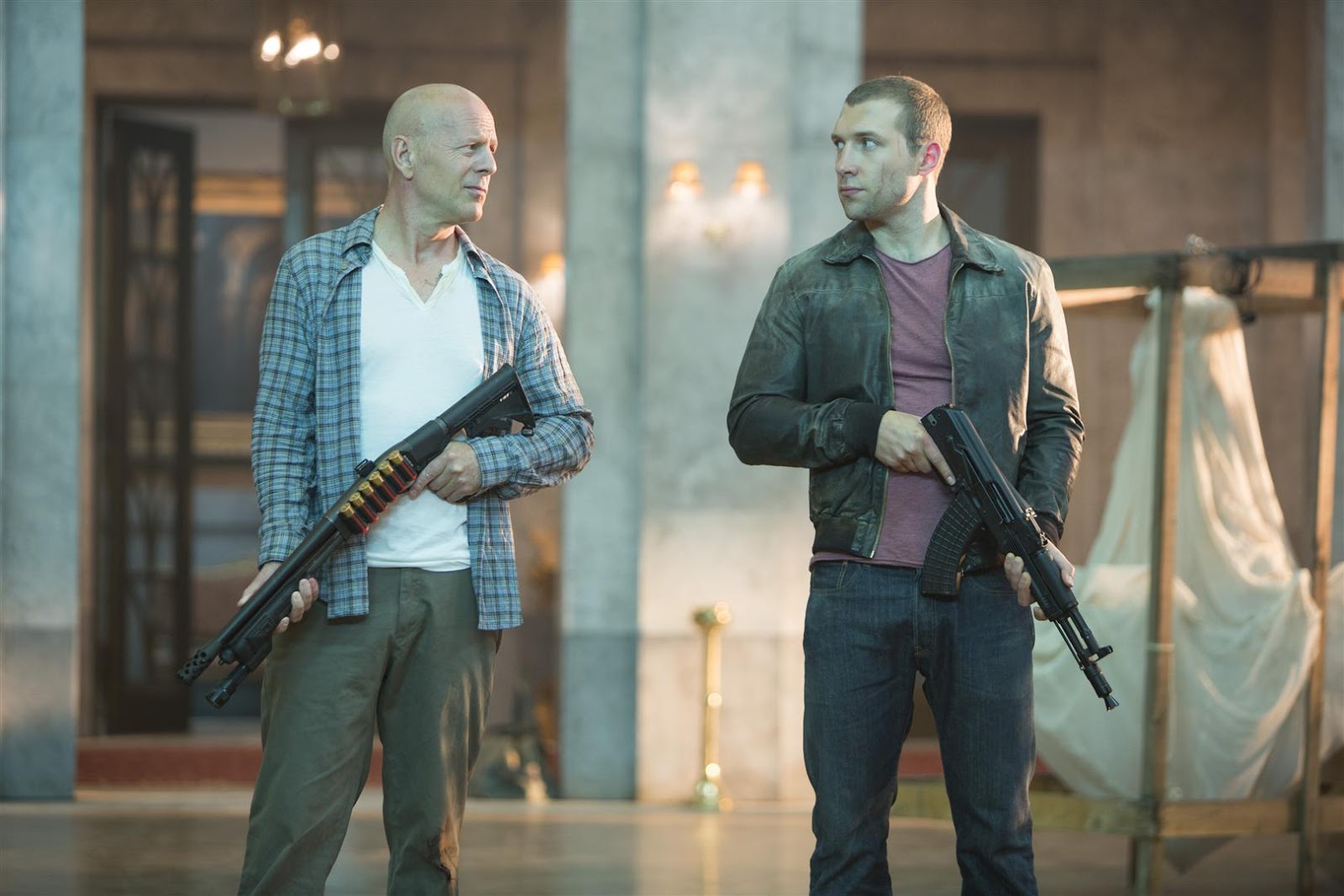
A Good Day to Die Hard must have seemed like a great idea to the producers. After all, who wouldn’t think: what’s better than McClane, our lone hero, going after bad guys? Well, the producers thought, “Two McClanes going after bad guys.” The sad part is that the movie’s plot is so lame, stupid, and out of place. The two didn’t look like heroes going through hell and doing the impossible (McClane-style) to take down the bad guys. Instead, it ended up looking like two Looney Tunes characters surviving impossible incidents—like falling off a skyscraper, surviving truck crashes and chases, and gas explosions. I couldn’t help but wonder what the director was thinking.

John Moore, the director, and Skip Woods, the screenplay writer, placed our favorite hero in an unfamiliar environment: Russia, where he’s a complete stranger. Bruce Willis reprises the lead role of John McClane, who travels to Russia to help his estranged son, Jack (Jai Courtney), out of prison. Once there, McClane discovers there’s more to his son’s imprisonment than he was led to believe, and soon he’s caught in the crossfire of a terrorist plot.

So, he went all “Yippee ki-yay,” Looney Tunes-style, in Russia.

The cinematography is below average, and the action and directing scenes are so far-fetched that they barely pass as an A-movie production. As a viewer, you’re forced into an uncomfortable position, enduring it all just to hear McClane say, “Yippee ki-yay, motherfu@#er.”

The movie did have a twist that I didn’t see coming, but it wasn’t enough to save the film. This movie is the shortest of all the Die Hard films, and if, like me, you remember our lone cowboy-like hero running around barefoot and single-handedly taking down the formidable Hans Gruber and his crew in the first movie—or landing planes in the second, facing Simon Gruber in the third, or battling Timothy Olyphant in the fourth—then you’ll hate this weak, cowardly villain and probably the movie itself.

After Expendables 2 (2012), our old heroes decided to make a comeback. Arnold Schwarzenegger starred in The Last Stand (2013), and Sylvester Stallone in Bullet to the Head (2013). Many, like me, looked forward to seeing these films. Now that I have, only Schwarzenegger’s movie is worth applauding.

This latest Die Hard addition is poor and doesn’t hold a candle to the others. Only die-hard John McClane fans can survive watching it. It’s a disappointing entry in a franchise that once set the standard for action films.

Die Hard 4.0: Live Free or Die Hard (2007)


Die Hard 4.0: Live Free or Die Hard (2007)


8/10


Starring
Bruce Willis
Justin Long
Timothy Olyphant
Maggie Q


Directed by Len Wiseman

The bad guys have returned 12 years after the last (Simon Gruber), and this time they decide to take John’s daughter. So, he parks an SUV up their asses, takes out their helicopter with a police car, and goes all “Yippee ki-yay, motherfu@#er” all over the film. Yes, this movie upped the action, with some very unrealistic things.

If you haven’t watched this wonderful addition to the Die Hard franchise, then you’re missing out. As I’ve said before in my Die Hard 2 review, Jack Bauer has nothing on John McClane. In fact, he wishes he could be as badass as this guy. My favorite part of this movie is when Bruce Willis gets his ass handed to him by Maggie Q, and then he goes all crazy on her.

The Die Hard franchise made it to the 21st century with Die Hard 4, and McClane was head over heels on top of the situation. This movie is so good that it’s hard to believe it was made 12 years after the last Die Hard. After Die Hard 3, I thought the producers had nothing left to add that would make this franchise memorable. But then, we’re introduced to McClane as a father of an adult daughter, and Daddy McClane doesn’t play around. Daughter McClane is just as crazy as Daddy-O.

The movie is based on a screenplay by Mark Bomback, from a story written by David Marconi, which was in turn based on John Carlin’s Wired magazine article “A Farewell to Arms.” The article is about a cyberattack on the United States, known as a “fire sale,” where the country’s transportation, telecommunications, financial, and utility infrastructure systems are attacked or taken over by the bad guys.

The story follows McClane, who, once again, is in the wrong place at the wrong time. He gets involved in modern-day warfare where criminals use computers to get the job done. John McClane (Bruce Willis) is sent to pick up a known hacker, Matt Farrell (Justin Long), and arrives just in time to save Farrell from being killed. But this doesn’t stop the terrorist group leader (Timothy Olyphant) and his right-hand woman (Maggie Q) from launching a cyberattack on the U.S.

As McClane moves Farrell, the group behind the “fire sale” attack continues to go after Farrell, which means they’re also after McClane. The showdown begins when McClane’s daughter is kidnapped, and now McClane is pissed. He’ll do anything to get her back.

As the series follows McClane aging, so does the length he’ll go to bring down the bad guys. Finally, after 19 years, we get a villain as good as Hans Gruber, making this film the second-best in the franchise, following the first Die Hard in 1988. That said, the focus on cyber-terrorism doesn’t have the same grounded, gritty feel as the earlier films, and this lack of grittiness makes McClane’s character, feel like a caricature of himself, losing the everyday man hero. I think this is caused by the over-the-top action in this movie, which I love, mind you, but I just feel I have to point this out.

The movie’s cinematography is head and shoulders above the three films before it, as is the CGI and visual effects (especially in the tunnel scene). Still, it was a commercial success and a critical hit, making this and the first film the only critically acclaimed entries in the five-film series.

The acting in this movie is wonderful. Justin Long was impressive, as were all the supporting cast members, making this the best film in the series when it comes to casting and acting. Timothy Olyphant was also impressive, and it was great to see a villain who could finally step into the shoes of Hans Gruber (Alan Rickman) from the first movie.

This is a nice movie with a great setup, a wonderful screenplay, and a must-watch. After this, the latest Die Hard film, A Good Day to Die Hard, was released in 2013.

Die Hard 3: With A Vengeance (1995)


Die Hard 3: With A Vengeance (1995)


7/10


Starring
Bruce Willis
Samuel L. Jackson
Jeremy Irons


Directed by John McTieman

Contains Spoilers

This movie is exciting, fast, and thrilling. It dives headfirst into action, leaving little room for story depth—just straightforward action with unbelievable performances by the leads. None of the supporting cast from the first two movies returns, but despite this, the film stands tall as a fantastic action movie that everyone should experience.

Die Hard with a Vengeance is a thrilling addition to the Die Hard franchise, pairing our hero John McClane with another powerhouse actor, Samuel L. Jackson. Together, they face off against a vengeful terrorist. The villain, Simon, seeks payback for McClane taking down his brother in the first Die Hard movie. But revenge isn’t his only goal—stealing over $140 billion in gold from the Federal Reserve Bank of New York is also part of the plan. Yeap, the villain to me was a bit too over ambitious with his plan, which made the stakes feel a bit unreal.

The movie kicks off with a massive explosion, and unlike the first two films, McClane is fully in control of the situation from the start—a welcome twist in the series. While the second movie (Die Hard 2: Die Harder) ended on a happy note with McClane and his wife Holly walking off together, this one starts with McClane as a washed-up cop dealing with the fallout from his split with Holly.


The plot revolves around a man who calls himself Simon, who plants bombs across New York City and plays a deadly game of "Simon Says" with the police. The unwilling participants are John McClane (Bruce Willis) and Zeus Carver (Samuel L. Jackson). Zeus gets dragged into the chaos when Simon forces McClane to wear a sign saying "I Hate Ni**ers" in a Black neighborhood. Zeus saves McClane from the backlash, and Simon ropes the duo into running all over New York to stop his bombs. Eventually, McClane and Zeus get ahead of Simon’s plans and take him down with McClane’s iconic line, "Yippee kai yay, motherfu@#er."

Directed by John McTiernan, who also helmed the original Die Hard, this movie is based on characters created by Roderick Thorp. Samuel L. Jackson delivers an outstanding performance as Zeus Carver, earning praise for his role. Jeremy Irons plays Simon, the villain, though his performance doesn’t quite reach the memorable heights of Alan Rickman’s Hans Gruber from the first film.

As Hans Gruber said in the original Die Hard (1988), “John Wayne doesn’t always walk away into the sunset with Grace Kelly” (with McClane correcting him, saying it was Gary Cooper). Similarly, this film gives us a hero whose life isn’t picture-perfect. McClane’s resourcefulness saves the day, but his personal life continues to unravel, and by the end of this movie, there’s no happy reunion with his wife. The movie does play some very convenient tones to make things fall easy for McClane and Zeus to save the day, also their banter at times, distracts from the overall plot.

Die Hard with a Vengeance had a production cost of $90 million—$20 million more than the second movie—and grossed over $360 million at the box office, $100 million more than its predecessor. After this installment, producers waited 12 years to release Live Free or Die Hard (2007), followed by A Good Day to Die Hard (2013).

I love this movie, and in the spirit of "Simon Says," I think everyone should see it. To me, it’s better than the second film in the franchise.


Die Hard 2: Die Harder (1990)


Die Hard 2: Die Harder (1990)


6/10


Starring
Bruce Willis
Bonnie Bedelia
Williams Sadler
Art Evans


Directed by Renny Harlin

Die Hard 2: Die Harder begins with McClane in good spirits, eagerly anticipating reuniting with his wife at the airport. But things quickly escalate as the new villain and his crew take their positions to execute their plan to seize control of Washington Dulles International Airport. The movie feels more formulaic, with the plot relying heavily on the first film’s structure. But as you watch, once again our lone hero takes on a terrorist gang again, in ways that would make even Jack Bauer (apologies to all 24 fans) envious.

In this second installment of the franchise, the action starts early. After a brief introduction, McClane is already taking down bad guys, with his first kill within the first 15 minutes. However, the movie isn’t without its flaws—like the scene where one of the villains inexplicably stops running to look back, conveniently getting himself killed so McClane can steal his ride.

Like the first film, Die Hard 2 is adapted from a book—this time, 58 Minutes by Walter Wager, released in 1987. The characters remain rooted in Roderick Thorp’s 1979 novel, Nothing Lasts Forever. This sequel also brings back some familiar faces, including McClane’s wife Holly (Bonnie Bedelia), reporter Dick Thornburg (William Atherton), and Al Powell (Reginald VelJohnson), who makes a brief appearance.


The story unfolds on Christmas Eve, just like the first movie. This time, terrorists take over the airport, intending to free their ally from a plane without interference. Unfortunately for them, McClane is at the same airport, and his wife is in the air aboard one of the planes running out of fuel. McClane must eliminate the terrorists and find a way to safely land the planes.

Once again, McClane is thrust into a mess similar to the first film, with a comparable setting. Just like before, he starts out carefree but ends up battered and bruised by the end. The action is relentless, and McClane’s determination keeps you hooked. With all these said, McClane’s character status from the first film feel a bit diminished here, from hero to like a supercop.

The production cost of this movie was three times that of the original Die Hard (1988), but it nearly doubled the box office earnings of its predecessor. Released in 1990, Die Hard 2 was a commercial success and received positive reviews, though it didn’t achieve the same critical acclaim as the first film. That said, if you’ve enjoyed the excitement of the original, there’s no reason not to dig into this sequel.

After Die Hard 2, 20th Century Fox waited five years to bring McClane back in Die Hard with aVengeance (1995). The franchise continued with Live Free or Die Hard (2007) and A Good Day to Die Hard (2013). And, of course, through it all, McClane never fails to drop his iconic “Yippee kai yay, motherfu@#er” as he takes down the bad guys.

Die Hard (1988)


Die Hard (1988)


9/10


Starring
Bruce Willis
Alan Rickman
Alexander Godunov                          


Directed by John McTieman


Extremely thrilling and heart-pounding, this 1988 classic action movie launched a multi-million-dollar franchise starring Bruce Willis as the lead. Spanning over 25 years, the latest addition to the series, A Good Day to Die Hard, was released in 2013. This movie boasts an exceptional cast, superior storytelling for its time, and an unforgettable villain in Hans Gruber (Alan Rickman). Rickman, known for iconic roles like the Sheriff of Nottingham in Robin Hood: Prince of Thieves (1991) and Severus Snape in the Harry Potter series, delivered a performance so compelling it’s almost surprising how Gruber ultimately lost.

No other lone-hero action movie has stood the test of time like Die Hard. This first installment in the series was nominated for four Academy Awards, including Best Sound Editing, Best Film Editing, Best Sound Mixing, and Best Visual Effects. Bruce Willis’s portrayal of John McClane received widespread acclaim, solidifying his place as a Hollywood action star. Growing up, my friends and I were obsessed with McClane’s iconic catchphrase, “Yippee kai yay, motherfucker,” which was even recognized in AFI’s 100 Greatest Movie Lines.


The movie’s plot and script are adapted from Roderick Thorp’s 1979 bestselling novel Nothing Lasts Forever. The story follows John McClane, a New York City police officer who unwittingly finds himself in the middle of a heist while visiting his family in Los Angeles. The heist is led by Hans Gruber, who uses the pretense of a terrorist attack to take over a skyscraper and steal $640 million in bonds. What Hans didn’t count on was McClane being in the building—a man willing to risk everything to stop him and his crew.

Two drawbacks of the movie is the portrayal of the Deputy Chief of Police, whose character feels frustratingly incompetent. Thankfully, his screen time is limited, making it easy to focus on the main story. The second one is, McClane always seem to be one step ahead of the bad guys conveniently, which of course stretches realism.

Die Hard was a massive commercial success, earning over $140 million on a $28 million budget. The screenplay, written by Steven E. de Souza (Commando (1985), and Die Hard 2: Die Harder (1990)) and Jeb Stuart, contributed significantly to the film’s enduring legacy.

For me, this is one of Bruce Willis’s best movies—second only to The Sixth Sense. If you’ve already seen it, I say, "go watch it again."

The franchise also includes Die Hard 2: Die Harder (1990), Die Hard: with a Vengeance (1995), Live Free or Die Hard (2007), and A Good Day to Die Hard (2013).


Disclaimer

All images featured on this site are the property of their respective copyright owners. They are used solely for illustrative and commentary purposes under fair use principles. This site is a personal blog, unaffiliated with or endorsed by any copyright holders. If you are the copyright owner of an image featured here and wish to have it removed, please contact me directly, and I will address your request promptly.